
Imagination and the Search for Truth
The Box ManUnreliable perspectives challenge factual certainty while allowing imagination to disclose emotional and moral truths.
increasing Bearing strength in each event
 decreasing
Bearing strength in each eventdecreasingPhotographic Evidence
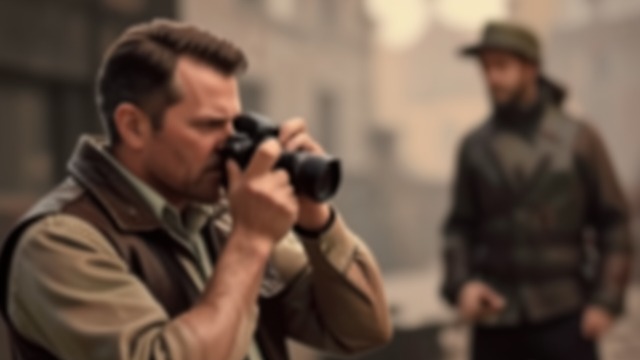
The Camera Captures an Attacker
A fast record
The wounded narrator photographs a man carrying what he believes to be an air rifle. He later treats the image as firm evidence of the attacker’s identity.
Evidence has a frame
The photograph can preserve posture and clothing but cannot explain motive or confirm every inference. Its authority is substantial but limited to what the camera actually records.
An Image Becomes an Accusation

The Doctor Identified
Details interpreted
The narrator reads the attacker’s clothes, shoes, and profession into the photograph and concludes that the man was the doctor. He uses the image to challenge the clinic’s denials.
A strong but incomplete case
The photograph supports his accusation, yet the conclusion depends on interpreting clues. The scene makes evidence neither meaningless nor sufficient to end the dispute.
Competing Accounts of the Room
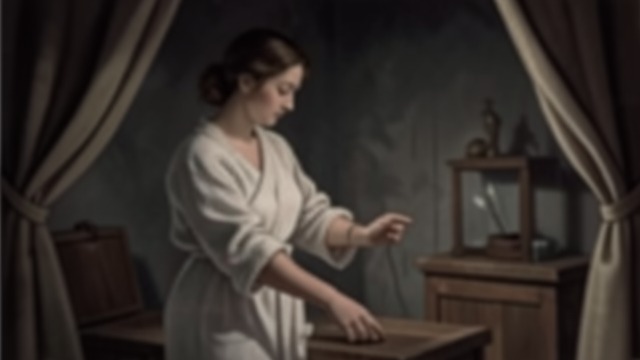
Two Versions of the Nurse
A visual narrative
The narrator describes observing Toyama Yoko naked with the fake box man and builds an elaborate account of her gestures. The scene is shaped by desire and jealousy.
A different testimony
An inserted dialogue recounts the encounter in different terms, involving darkness, an injection, and the doctor’s requests. The contradiction prevents either version from becoming unquestioned fact.
C’s Story Before the Event
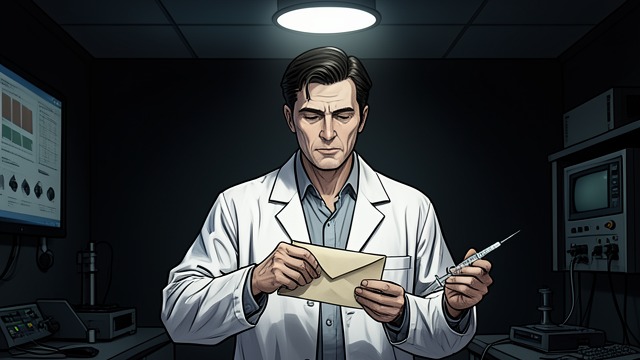
A Future Report
An affidavit anticipates a corpse
C writes about a boxed body and its supposed death before its discovery. His account makes a future event appear already fixed in the past.
Facts become unstable
Because the narrative also includes an imagined murder plan, the affidavit may be testimony, fiction, or a defense prepared in advance. Its detailed form increases rather than eliminates uncertainty.
Imagination as a Shortcut
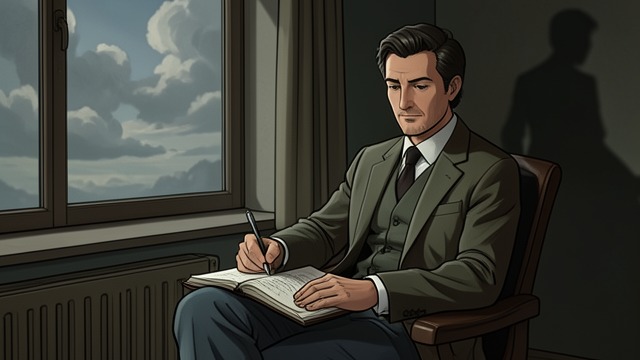
The Narrator Defends Invention
A distinction from lying
The narrator argues that imagination may lead toward truth even when its products are not factual records. He rejects a tidy detective-story solution in favor of contradictions that reveal how people think.
A reader without certainty
The claim does not explain every discrepancy, but it clarifies the novel’s method. The reader must assess not only what happened but why each narrator needs a particular version to be believed.
At the moment the narrator is shot
During the narrator’s return to the hospital
Between the narrator’s mirror scene and the inserted dialogue
Near the final Saturday night
In the final insertion
